


A wooden body.
A bow drawn across them.
From something so seemingly simple comes one of the most emotionally expressive voices in music.
The violin can whisper.
It can cry.
It can dance.
It can create tension, tenderness, excitement, grief and joy—sometimes within the same piece of music.
For ArtSHINE Music, the violin is particularly interesting because it is both deeply connected to Western musical traditions and extraordinarily adaptable. It can stand at the centre of a classical orchestra, appear in folk traditions, soar through a cinematic soundtrack or enter into conversation with instruments from entirely different musical cultures.
That versatility makes the violin an ideal instrument for our Instrument Stories — Where Musical Worlds Meet series.
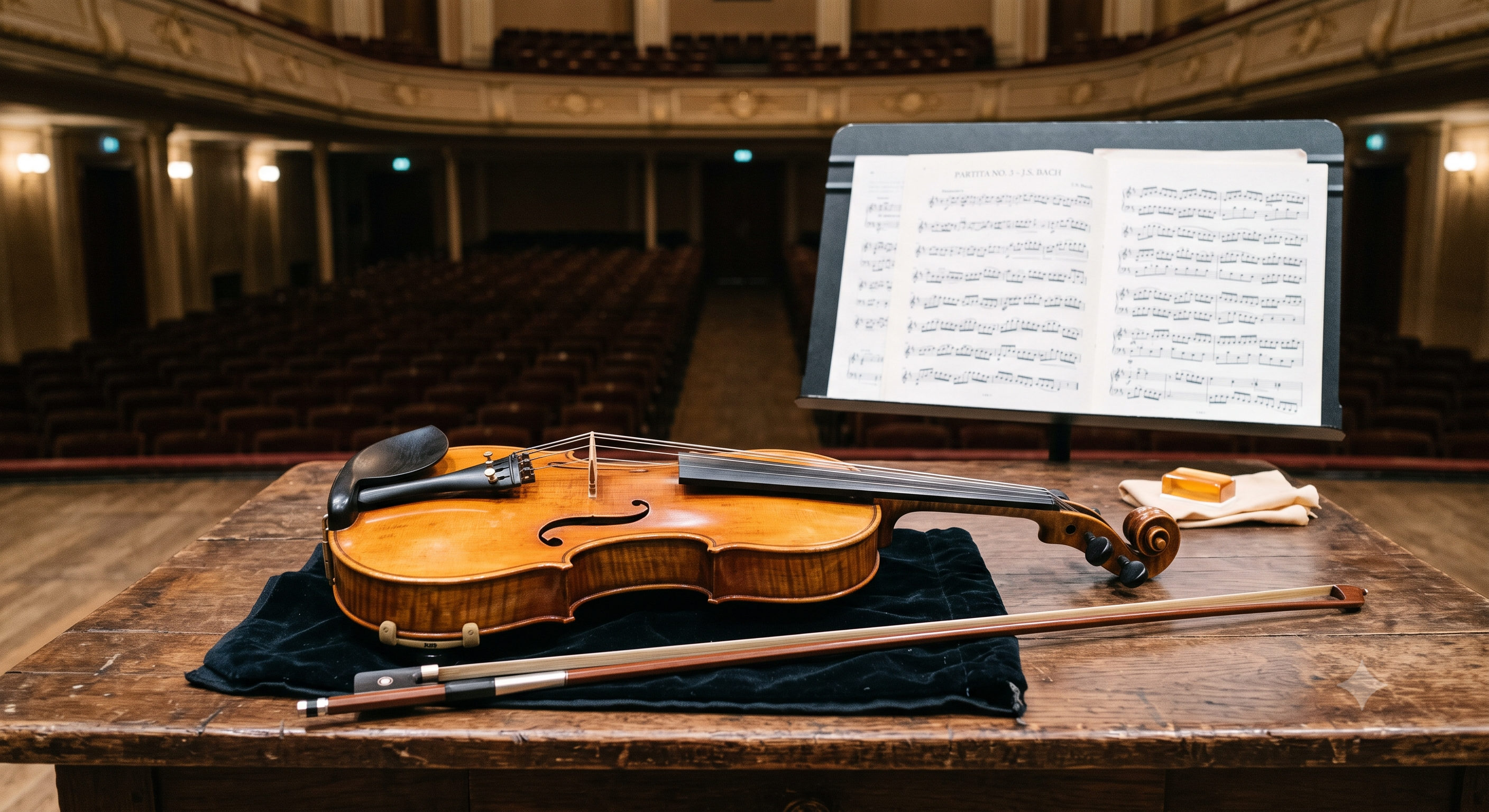
What Is the Violin?
The violin is the smallest and highest-pitched member of the modern violin family, alongside the viola, cello and double bass.
The instrument in the form we recognise today developed in Europe, particularly in northern Italy, during the 16th century.
It has four strings—traditionally tuned G, D, A and E—and is normally played with a bow, although the strings can also be plucked in a technique known as pizzicato.
But describing the violin mechanically tells us very little about why it has remained such an important musical voice for centuries.
The real magic happens between the musician, bow and string.
A violinist controls the speed and pressure of the bow, where it contacts the string, the placement of the fingers and the movement of the left hand.
Tiny changes can completely alter the character of a note.
The result can be delicate or powerful, smooth or raw, restrained or intensely emotional.
Why Can the Violin Sound So Emotional?
There is something remarkably voice-like about a violin.
Unlike a piano, where a note begins to fade after it is struck, a violinist can sustain a note and continue shaping it while it sounds.
The note can grow.
It can soften.
It can tremble through vibrato.
It can slide gently from one pitch to another.
It can almost seem to breathe.
This ability to continuously shape a note helps explain why the violin can communicate emotion so directly.
Sometimes one sustained violin note can say more than an entire musical arrangement.
That is a powerful lesson for composition.
Emotion does not always come from adding more sound.
Sometimes it comes from allowing one musical voice enough space to speak.
Four Strings, Many Musical Worlds
Although strongly associated with Western classical music, the violin does not belong only to the concert hall.
Over centuries it has travelled widely and become part of numerous musical traditions.
It can be heard in folk and traditional music, jazz, country, popular music, experimental composition, theatre, film scores and contemporary electronic production.
Different musicians and traditions have developed their own ways of playing it.
Even the language changes.
In some musical settings we talk about a violin.
In others, the same basic instrument may be called a fiddle.
The instrument hasn't necessarily changed.
Its musical context has.
This is something we find fascinating at ArtSHINE Music.
An instrument's identity isn't determined only by how it was built
It is also shaped by who plays it, how they play it and the story the music needs to tell.
From Intimacy to Cinematic Scale
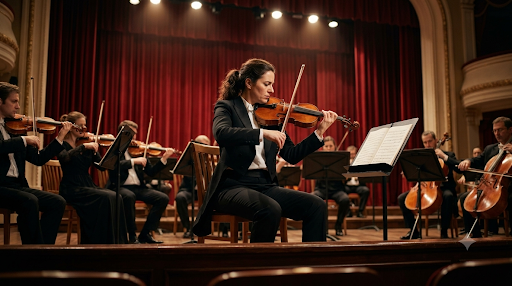
Few instruments can change scale as naturally as the violin.
A solo violin can feel extraordinarily intimate.
Put several violins together and the emotional character begins to expand.
Place them within a full string section and they can become enormous.
This is one reason strings are so important in film music.
Imagine a quiet scene of remembrance.
A single violin enters.
The arrangement barely moves.
Then additional strings gradually appear as the emotion develops.
Without a word being spoken, the audience can feel that something has changed.
The same instrument that whispered at the beginning can eventually become part of a sweeping cinematic landscape.
For storytelling, that flexibility is incredibly valuable.
The Violin Doesn't Always Need to Lead
The violin is famous for melodies, but melody is only one of its roles.
Sometimes the most effective violin part is almost invisible.
It might hold a long note beneath another instrument.
Create a gentle rhythmic texture.
Add tension.
Answer a vocal phrase.
Provide harmony.
Or appear for only a few seconds at an important emotional moment.
This connects strongly with the ArtSHINE Music philosophy that story comes before instrument.
We don't need to use the violin simply because it is beautiful.
We need to understand what role it has in the story.
Sometimes it should speak.
Sometimes it should listen.
When Violin Meets a Different Musical Tradition
This is where things become particularly interesting for our Instrument Stories series.
What happens when the violin is placed beside an instrument whose musical language developed somewhere completely different?
Consider the erhu.
Both are bowed string instruments capable of extraordinary emotional expression.
But they are not interchangeable.
Their construction, timbre, techniques, histories and cultural contexts are different.
A meaningful composition doesn't need the violin to imitate the erhu—or the erhu to become a substitute violin.
Instead, they can converse.
One musical phrase can be answered by another.
Their tonal differences can become part of the emotional story.
The listener hears connection because they can also hear difference.
Violin and Guzheng
The violin also creates an interesting relationship with the instrument we explored in our previous Instrument Stories article: the guzheng.
Here we have two string instruments creating sound in very different ways.
The violin's bow can sustain a note.
The guzheng's strings are plucked and allowed to resonate.
The violin can create a long melodic line while individual guzheng notes shimmer around it.
Or the relationship can be reversed.
The guzheng can establish movement while the violin provides a sustained emotional layer.
Neither instrument needs to surrender its identity.
That is exactly the kind of relationship we are interested in exploring at ArtSHINE Music.
Not one instrument dominating another.
Not one culture becoming decoration for another.
But two distinct musical voices contributing to the same story.
A Violin Can Belong to Today
Just as we don't believe the guzheng should automatically be used to make music sound ancient, the violin shouldn't automatically make music sound classical.
Context changes everything.
Combine violin with piano and the result may feel intimate.
Place it over electronic textures and it can feel contemporary.
Combine it with percussion and it can become rhythmic.
Place it alongside cultural instruments and entirely new relationships emerge.
Use a solo violin within cinematic sound design and one familiar instrument can suddenly feel completely different.
This is where composition becomes exciting.
We are not asking:
“What genre does this instrument belong to?”
We are asking:
“What can this instrument contribute to this particular story?”
The Human Behind the Instrument
There is another important element that should never disappear from conversations about music.
The musician.
Two violinists can play exactly the same written notes and make us feel something completely different.
Technique matters.
But so do interpretation, experience, sensitivity and intention.
The slight hesitation before a note.
The strength of a bow stroke.
The amount of vibrato.
The decision to let a phrase breathe.
These are human choices.
Technology can help composers sketch arrangements, explore combinations and imagine possibilities. But the expressive knowledge of a skilled musician adds another dimension.
For ArtSHINE Music, this is why collaboration with musicians remains so important as our music develops.
Four Strings. Endless Emotion.
Perhaps that is what makes the violin so enduring.
Its basic construction seems relatively simple.
Four strings.
A bow.
Wood and resonance.
Yet generations of musicians have discovered countless ways of making those four strings speak.
The violin can celebrate.
It can mourn.
It can create suspense.
It can dance.
It can accompany.
It can stand completely alone.
And when it meets instruments from other musical traditions, another set of possibilities begins.
For ArtSHINE Music, that is where the most interesting question lies.
Not simply:
What can the violin play?
But:
Who can the violin speak with next?
Bring Emotion to Your Story Through Music
Are you creating a film, brand campaign, cultural celebration, destination experience, event or special project?
ArtSHINE Music creates original music that brings cultural instruments, Western instrumentation and contemporary storytelling together—choosing musical voices because they belong to the story, not simply because they sound impressive.
You can license an existing ArtSHINE Music song, or talk to us about customising or creating original music specifically for your film, brand,
organisation, event or project.
Talk to ArtSHINE Music and discover what your story could sound like.
Next in Instrument Stories: Guzheng + Harp — Two Worlds of Strings.